...I hope you like it...
“I am not used to making friends,” I said.
“But… I can try.”
There is nothing imaginary about imaginary friends.
They are real—especially to a child desperate for one.
I learned early that sharp things didn’t belong in soft places.
Odors were something to apologize for.
Strong flavors were mistakes.
To be told, again and again, that pungent things had no place in delicate dishes leaves a person feeling like a flaw.
My mom is a baker.
She rolls dough with steady palms, presses bread into symmetry, cracks eggs like they owe her obedience.
Her hands are soft from flour and sugar, always sweet with vanilla and warm milk.
Everything about her smells like it belongs.
Her soft curls and brown eyes unsettle me.
But what unsettles me more is the quiet understanding that I do not belong in her sweetness.
If you placed us side by side, you would see a small, narrow woman and her wide child.
I know I am fat.
I know I am darker than the other children.
But her eyes repeat it without speaking.
They linger too long, like a finger pressing a bruise.
Once, the school called her because I threw up.
I remember the tightness before it happened.
The burning climb.
My classmates stared—not with pity, but with fascination.
My face went purple.
My mouth went sour.
The air went acidic.
I was “stinky.”
When she picked me up, she didn’t touch me.
At home, her eyes traced my outline the way she measured dough when it wouldn’t rise.
Her hands did not cup my cheeks.
They did not steady my shoulders.
My home was not safe.
Neither was school.
No matter where I went, I took up too much space.
I never had a dad.
Sometimes I pretend he left me something—-a remnant of what he hoped I would become.
My favorite heirloom is a blanket.
Quilted. Thirty-four by twelve.
My cape.
I wore it every day.
I still do.
Just in private.
—
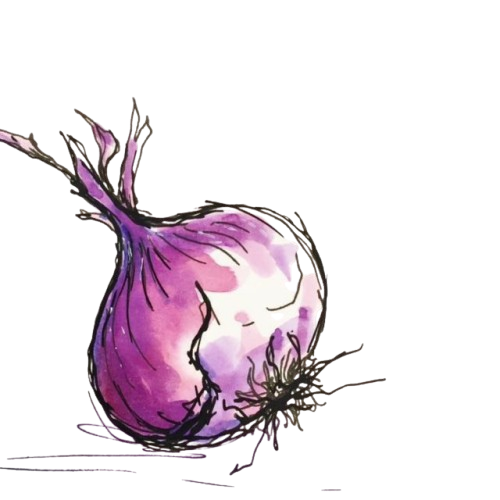
I found the onion in the forest.
“I am not used to making friends,” I told it again, hopefully solidifying my hesitance.
“But… I can try.”
It sat there—layered, round, unapologetically sharp.
“What am I doing?” I muttered.
Telling an onion my life story.
Still, I picked it up.
The walk home was long and quiet.
What is an onion supposed to do—respond?
It didn’t matter.
This onion was mine.
I placed him carefully on the kitchen counter before washing my bruised knees and dirt-streaked fingers.
I wanted him to see my room clean.
I wanted him to know I wasn’t always a mess.
On the walk back, I tried to disguise the stains on my shirt and the pants that no longer wanted me.
When I came back, he was on the floor.
“Don’t leave trash on the counters. I just got them done,” she said, cigarette smoke curling around her words.
Trash.
I looked at her small frame and wondered how someone so little could take up so much air.
“Shut up,” I said.
The silence afterward was louder than the word.
Her hand lifted.
I realized too late that apologies only work when someone wants to hear them.
“I hate you.”
The hurt that crossed her face startled me.
I wasn’t prepared to see that I could bruise her too.
So I ran.
I grabbed my onion and locked myself in my room.
Is he ashamed of me now?
I wrapped my quilt around my shoulders like armor.
Maybe I will transform.
Maybe capes turn boys into something braver.
Maybe they hide their round stomachs and disguise their scabs and dirty fingers
Right?
Right?
“Am I alright?” I whispered.
The onion did not answer.
But the silence felt kind.
—
Days passed.
Everywhere I went, my onion went too.
He softened.
Purple fading to white, then to green.
Mold, they would say.
Decay.
As he changed, I wondered if I was doing the same—going bad, or just becoming something else.
Who was I to judge transformation?
We all rot a little when left untouched.
Some days no one noticed us.
Some days they did.
Pointing.
Whispering.
Then one day, the air felt like spring before it fully arrives.
That was when I saw her.
She was… different.
Not kinder, exactly.
Just warmer.
The kind of warmth that doesn’t burn.
I don’t know what shifted inside me.
But something did.
I wanted to speak.
I wanted to shower.
I wanted to be gentle.
As my onion shriveled, she appeared more often.
“Why do you run?” she asked.
Why don’t you? I thought.
“Why don’t you talk?”
Why do you talk so much?
“Do you know you’re purple?”
I do, I almost said.
I have eyes.
Her voice was curious, not cruel—but it still stung.
One afternoon, she sat beside me.
“Do you want some of my salad?”
I glanced down.
Lettuce.
Tomatoes.
Carrots.
And onion.
Thin.
Intentional.
Belonging.
Just like mine.
“Would you like to be friends?” she asked.
I shook my head.
“I think I’ll make you cry,” I whispered.
“No,” she said. “I think you’d only make me cry if you left.”
Her eyes were warm—like coffee you sip slowly.
“Say ahh.”
I hesitated.
Then I did.
And suddenly my mouth was full of flavor.
Sharp.
Bright.
Alive.
Maybe onions don’t belong in cakes.
Maybe they don’t belong on polished counters.
But they belong somewhere.
In dishes where scraped knees and round stomachs are not mistakes.
In meals where capes are allowed.
In places where being sharp is not the same as being wrong.
And for the first time—
I did not taste like poison.
I tasted like myself.